
The Magic of the Wheel
João Coelho
The Magic of the Wheel
João Coelho
The Magic of the Wheel
João Coelho
22 June, 2026
I was born in Angola, but the upheavals of the country’s decolonization and independence process forced my family to migrate to Portugal. I built my life there until 2008, when the pull of my homeland became undeniable, and I returned to Angola. Working on the front lines of public projects for social and institutional development meant looking daily into the eyes of extreme poverty and vulnerability. This immersive experience did not just alter my career—it radically dismantled and rebuilt the way I see human existence.
Driven by a profound need to document the quiet heroism of these communities, I turned to documentary photography. My purpose shifted from observing to witnessing: telling survival stories through a deeply humanistic, transformative lens, and restoring the dignity, voice, and reverence that society had stripped away.
For me, the camera is a tool to study the raw architecture of the human condition—specifically, the fierce resilience that emerges from the absolute fragility of life. While my early work leaned into color, I have come to work almost exclusively in black and white. Stripping away the distraction of color forces the viewer to confront the naked emotion of the scene, making the narrative uncompromising and impactful.
Today, my practice is entirely project-based, allowing me to abandon fleeting snapshots in favor of deep, structured, and visually solid narratives. Ultimately, I do not wish for my images to be merely looked at; I want them to provoke a reaction, trigger a conscience, and demand action. Forcing society to look into its own shadows to inspire change is my ultimate purpose—both as a photographer and as a human being.

"These stark, high-contrast images serve to celebrate the ultimate victory of human simplicity over material excess. Without any of the modern artifices, dictates, or false promises of commercial consumerism, these resilient children prove a profound truth to anyone who stops to look: the true essence of play does not reside within the wealth of the object itself, but entirely within the untamed spirit of the one who guides it forward."
Under the same dull sky that permanently shapes the contours of the vast landfill where they were born and raised, a sudden, vibrant movement defiantly breaks the stillness of despair. For these children, whose only known horizon since birth has been a chaotic labyrinth of industrial and domestic waste, the world unexpectedly gains a brand-new velocity. This shift happens the exact moment the oldest, most foundational secret of human ingenuity is uncovered in the dirt.
In this forgotten corner of the world, there are no gleaming bicycles waiting to be ridden, no polished pedal cars, and no complex electronic circuits to capture a child's imagination. There is only the landfill—immense, unforgiving, and relentlessly gray. And yet, a strange, magnetic force is born when the surrounding debris ceases to be treated as mere refuse and is suddenly transformed into pure, unadulterated motion.
In this evocative scene, we witness the raw awakening of an ancestral fascination that has guided humanity for millennia: the universal magic of the wheel. Armed only with worn wooden sticks salvaged from the debris, their bare feet dug firmly into the hard, compacted ground, and their clothes carrying the deep, unmistakable patina of daily labor and time, these children run side by side with perfect, spinning circles of discarded rubber and metal.
An old, treadless motorcycle tire, a warped and rusted bicycle rim, or a broken plastic toy that somehow managed to keep its wheels intact—everything that has been discarded and deemed completely useless by the modern world of adults gains a second, remarkably noble life the moment it lands in the hands of childhood. Here, waste is not an end point; it is a raw material for joy.
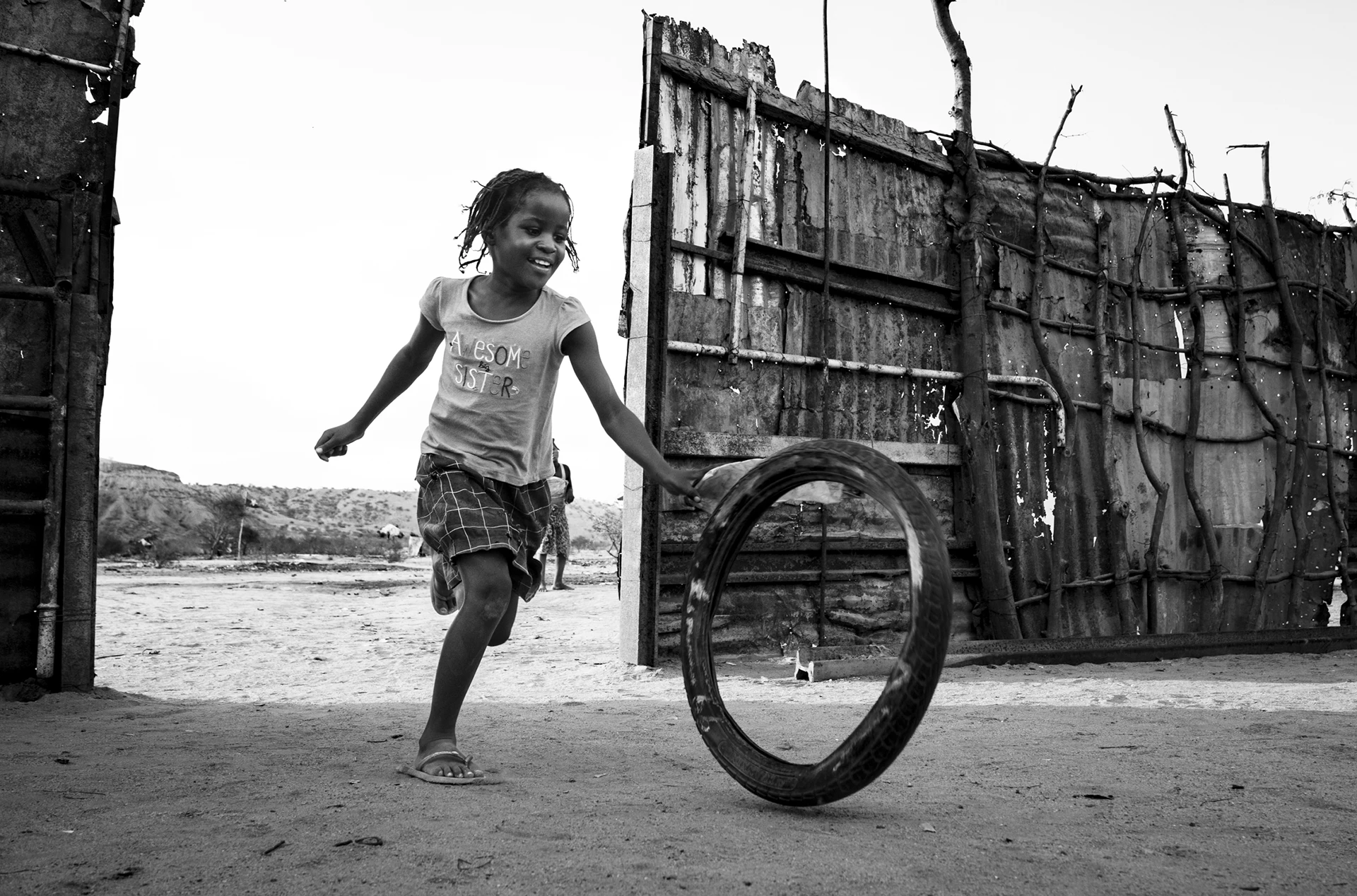
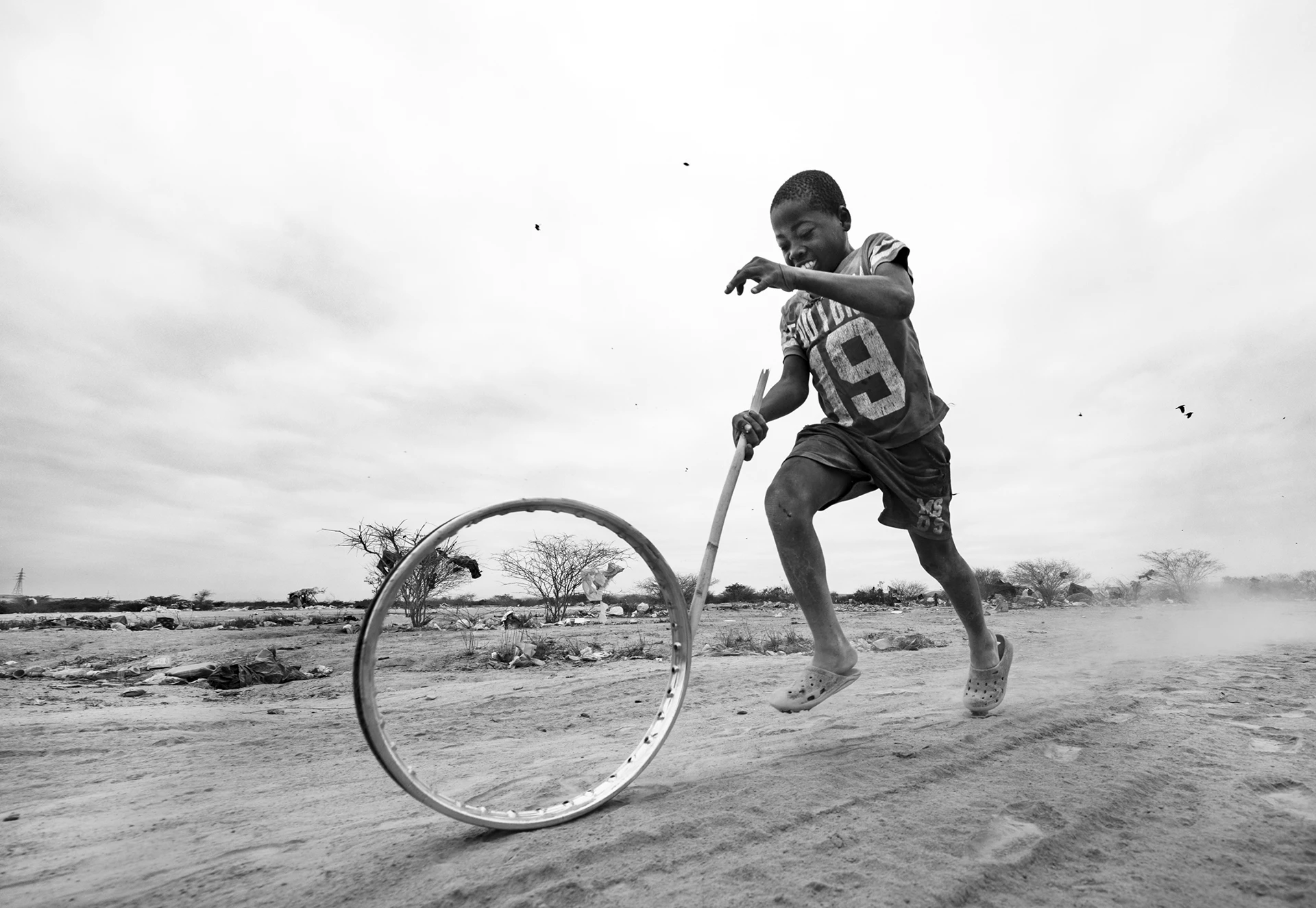
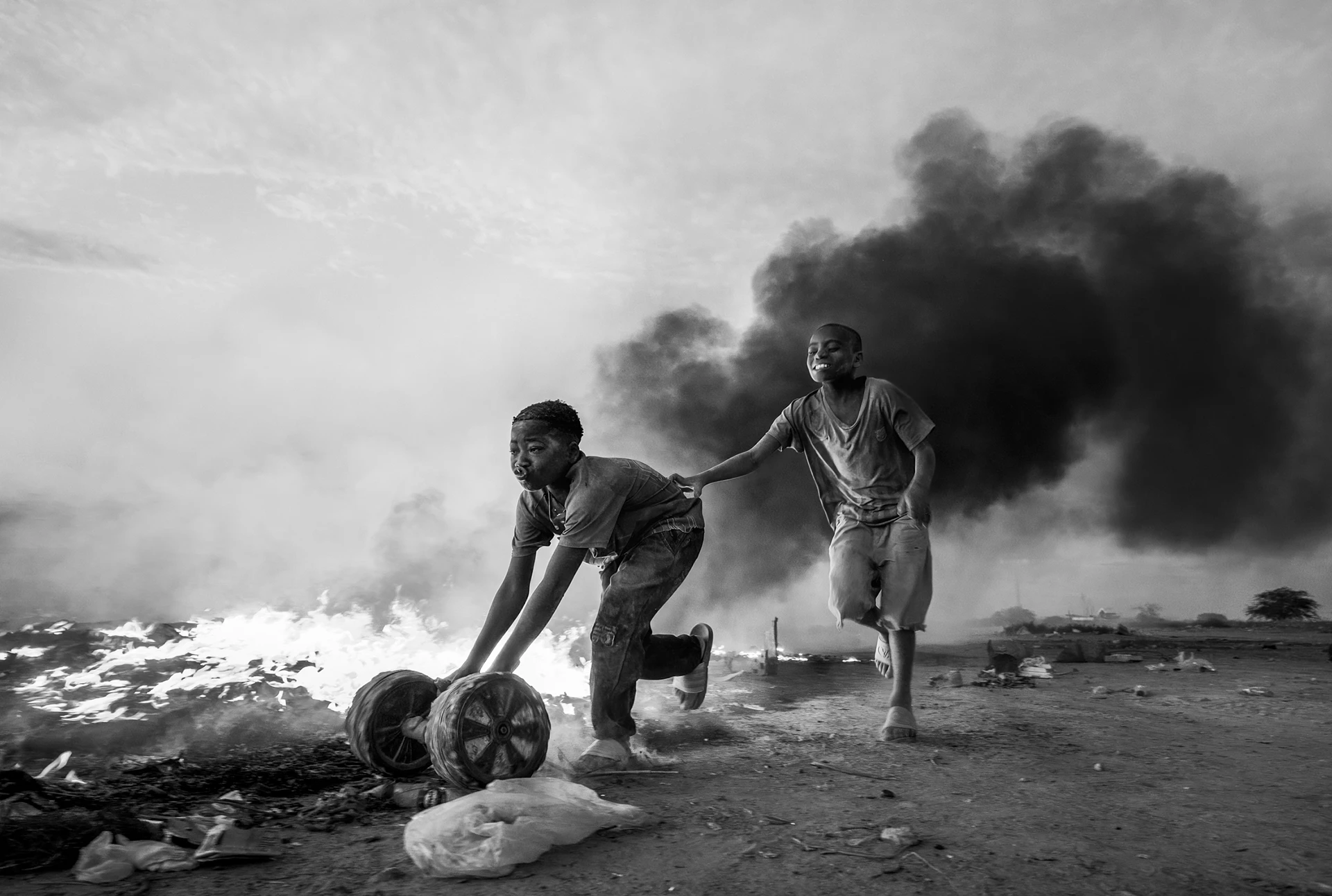
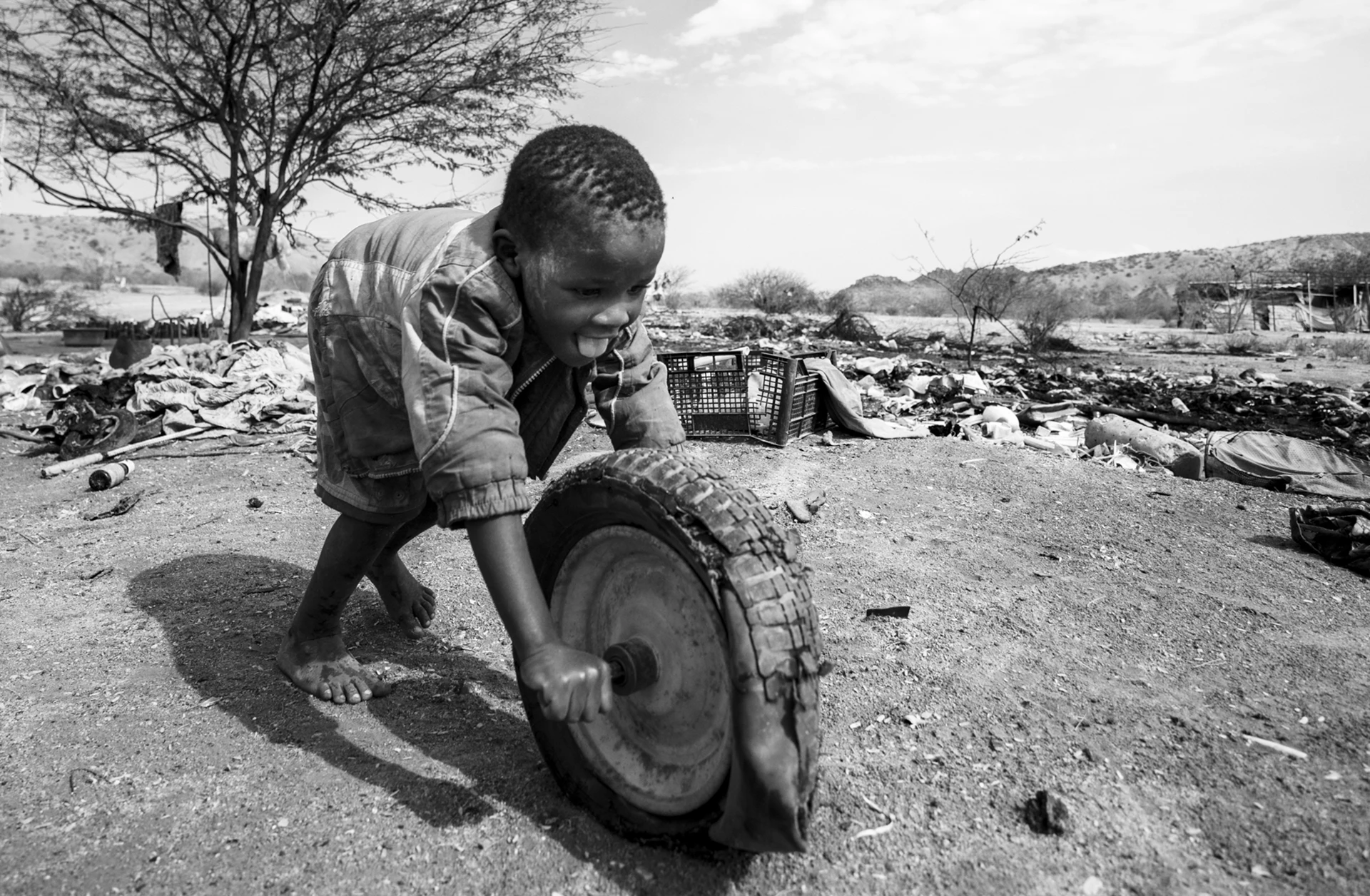
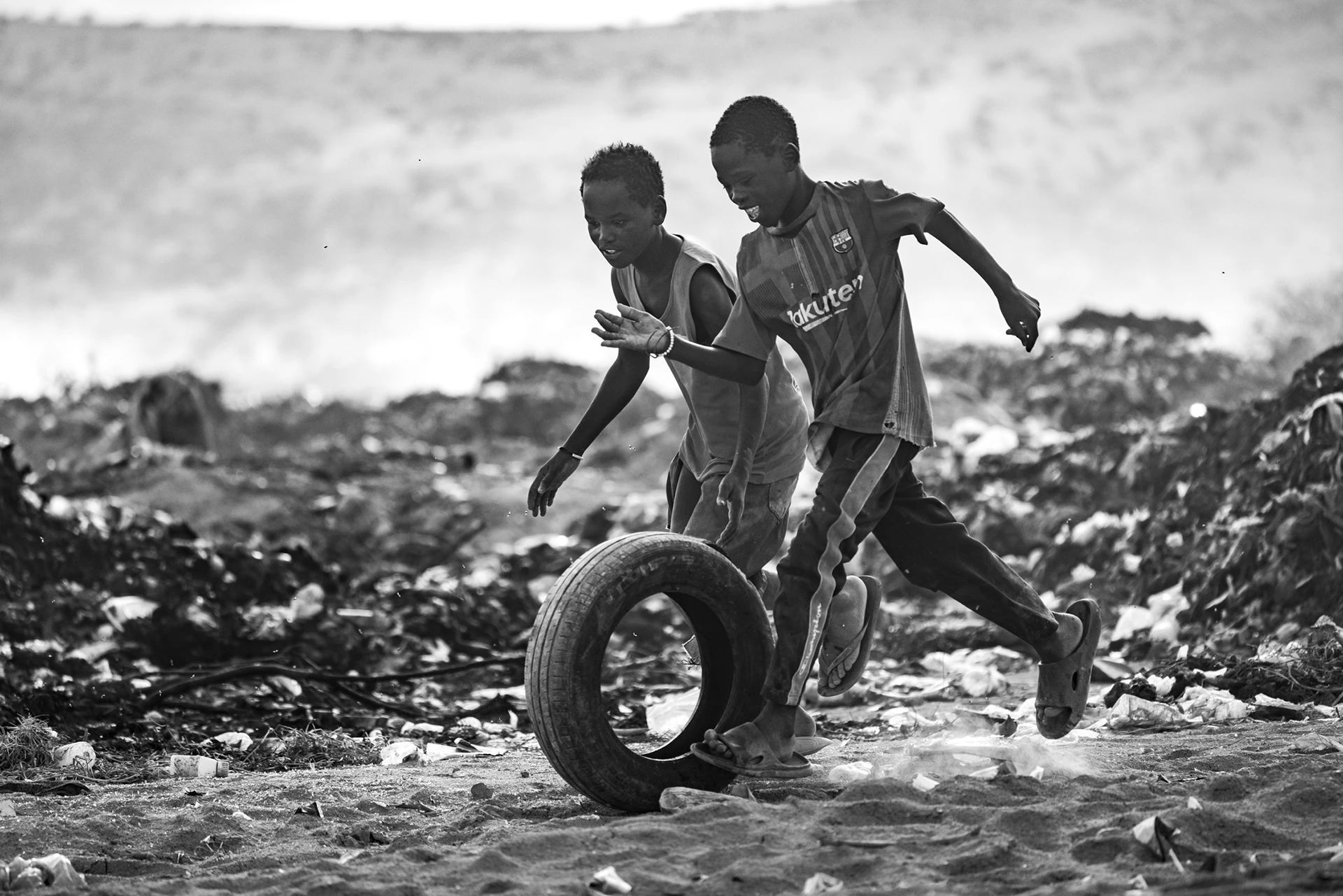
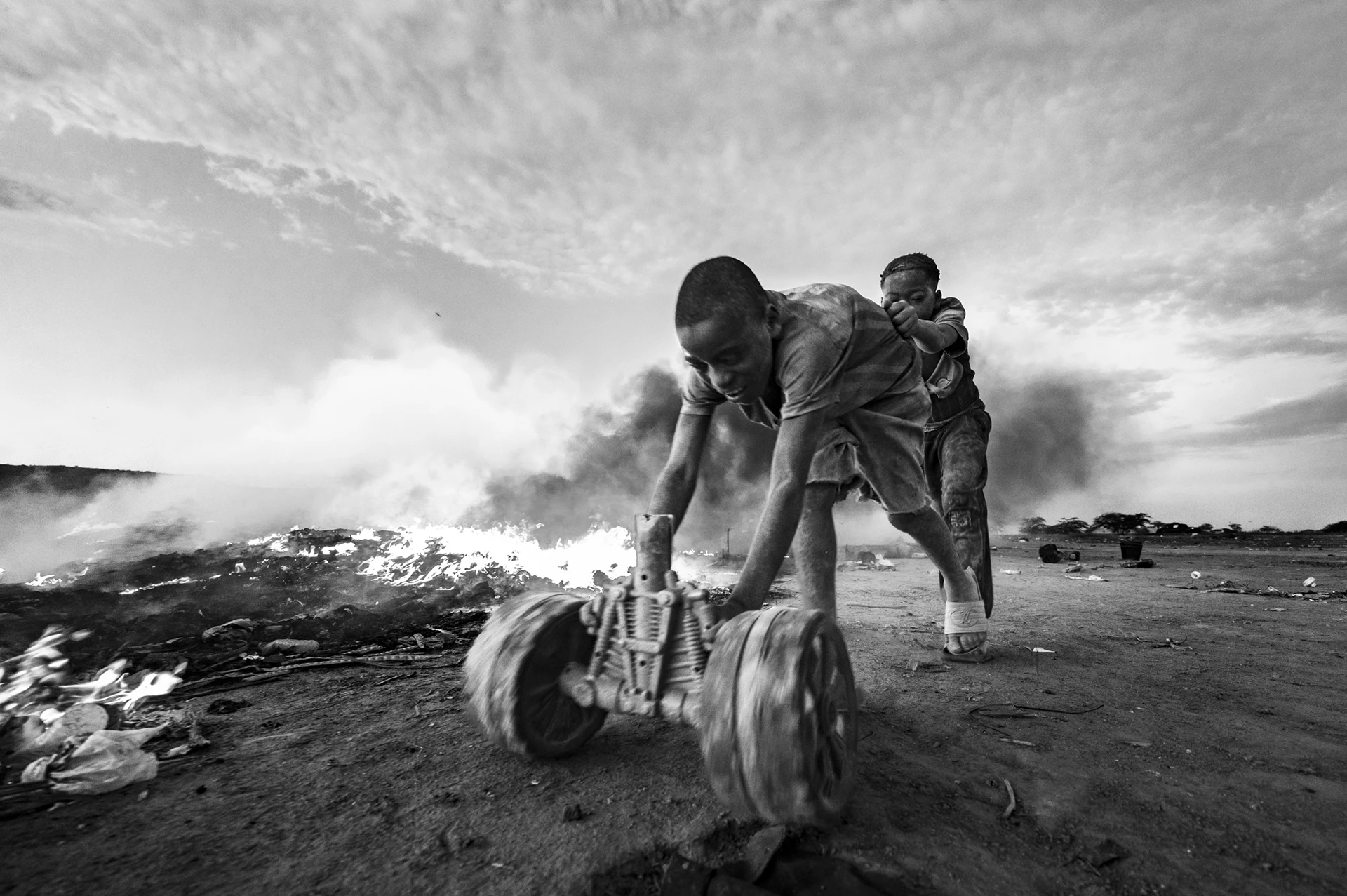
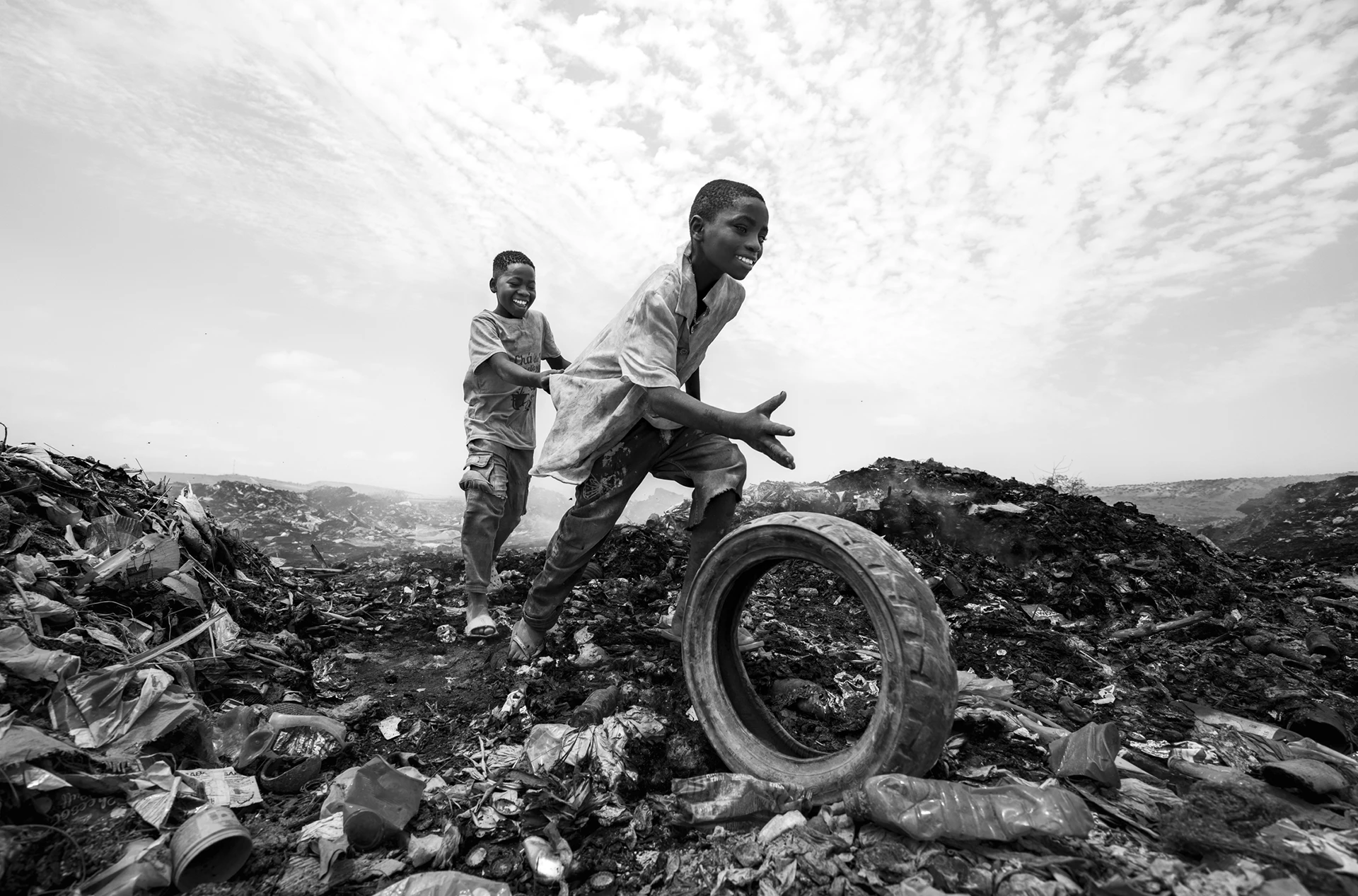
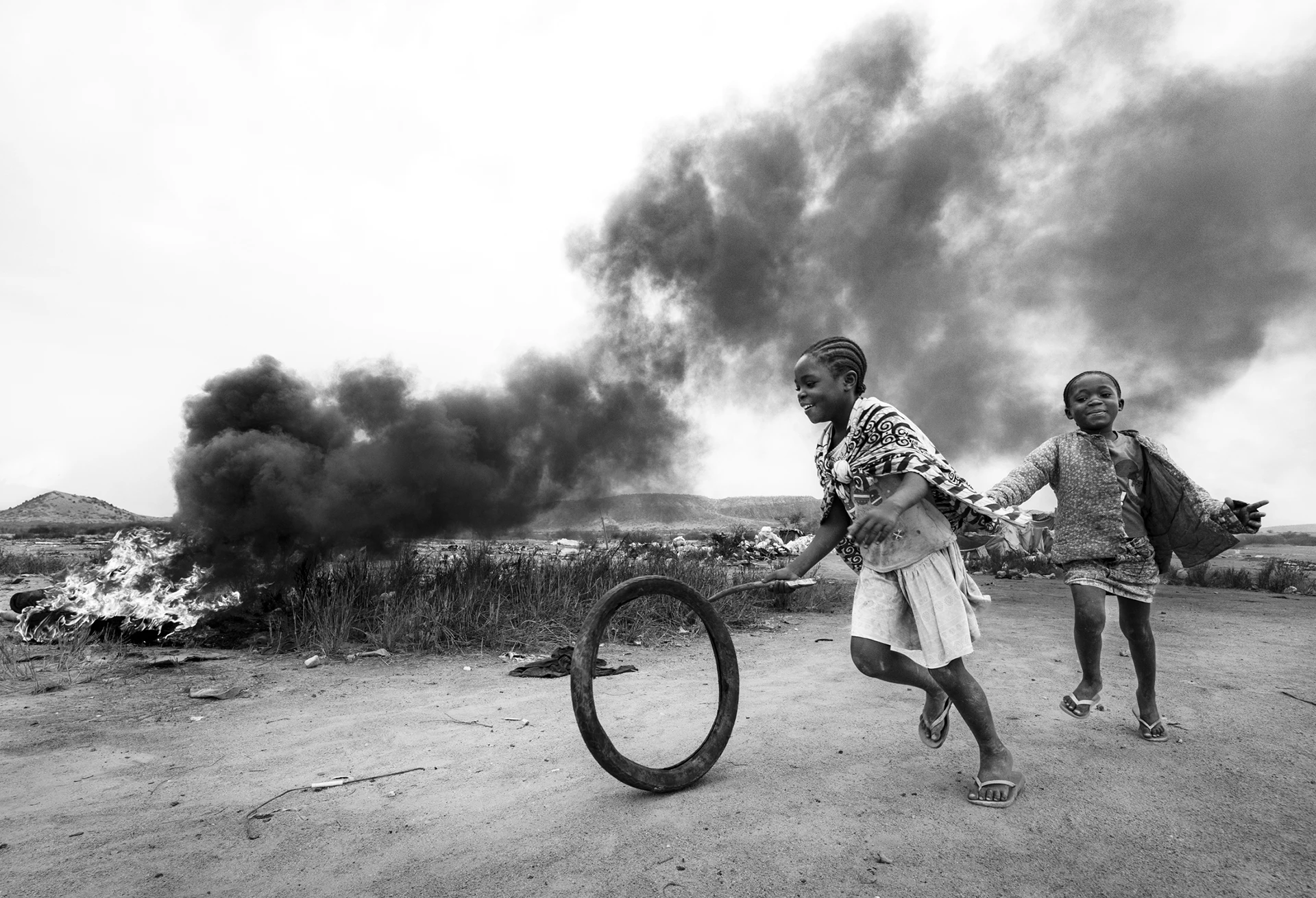
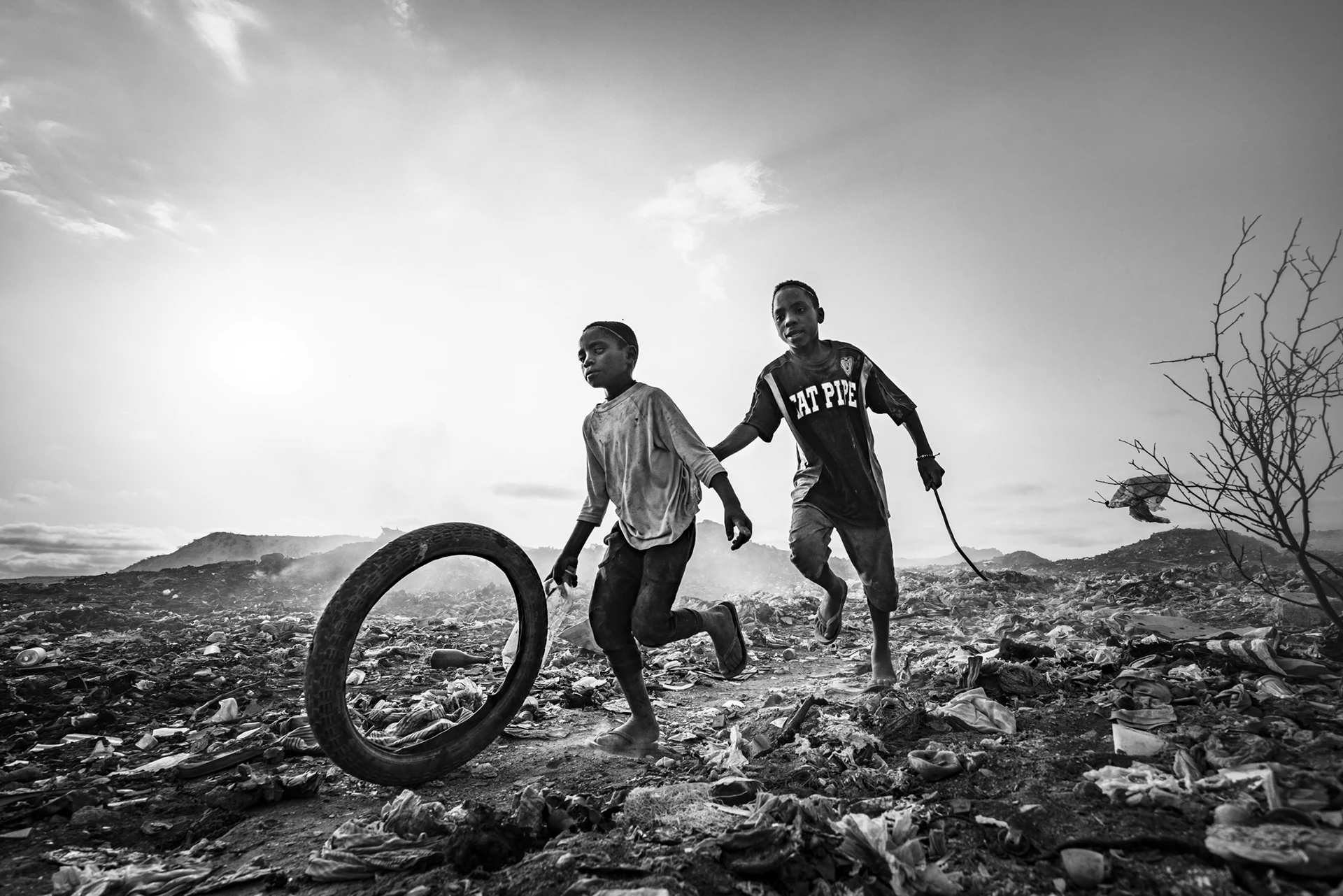
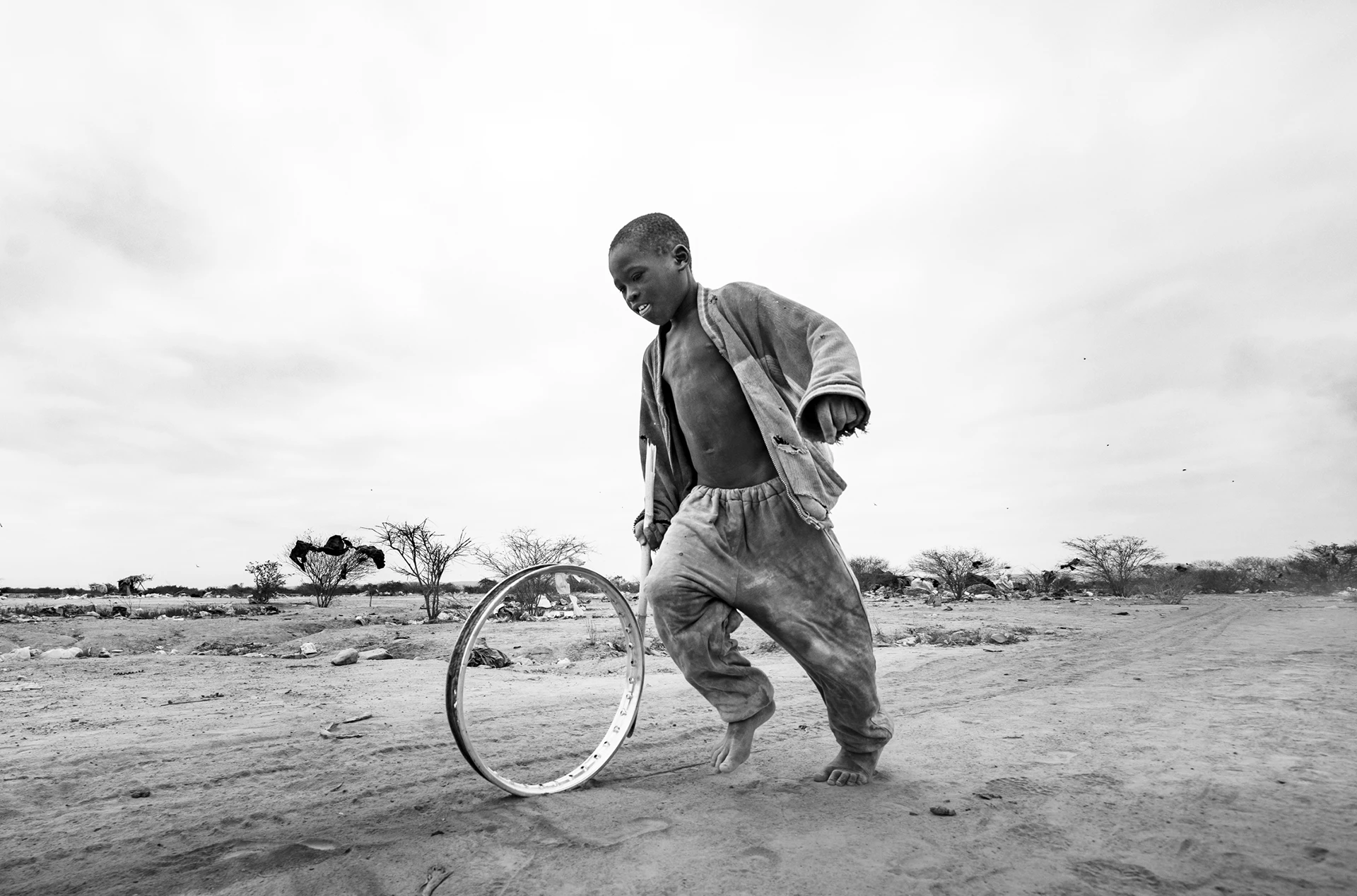
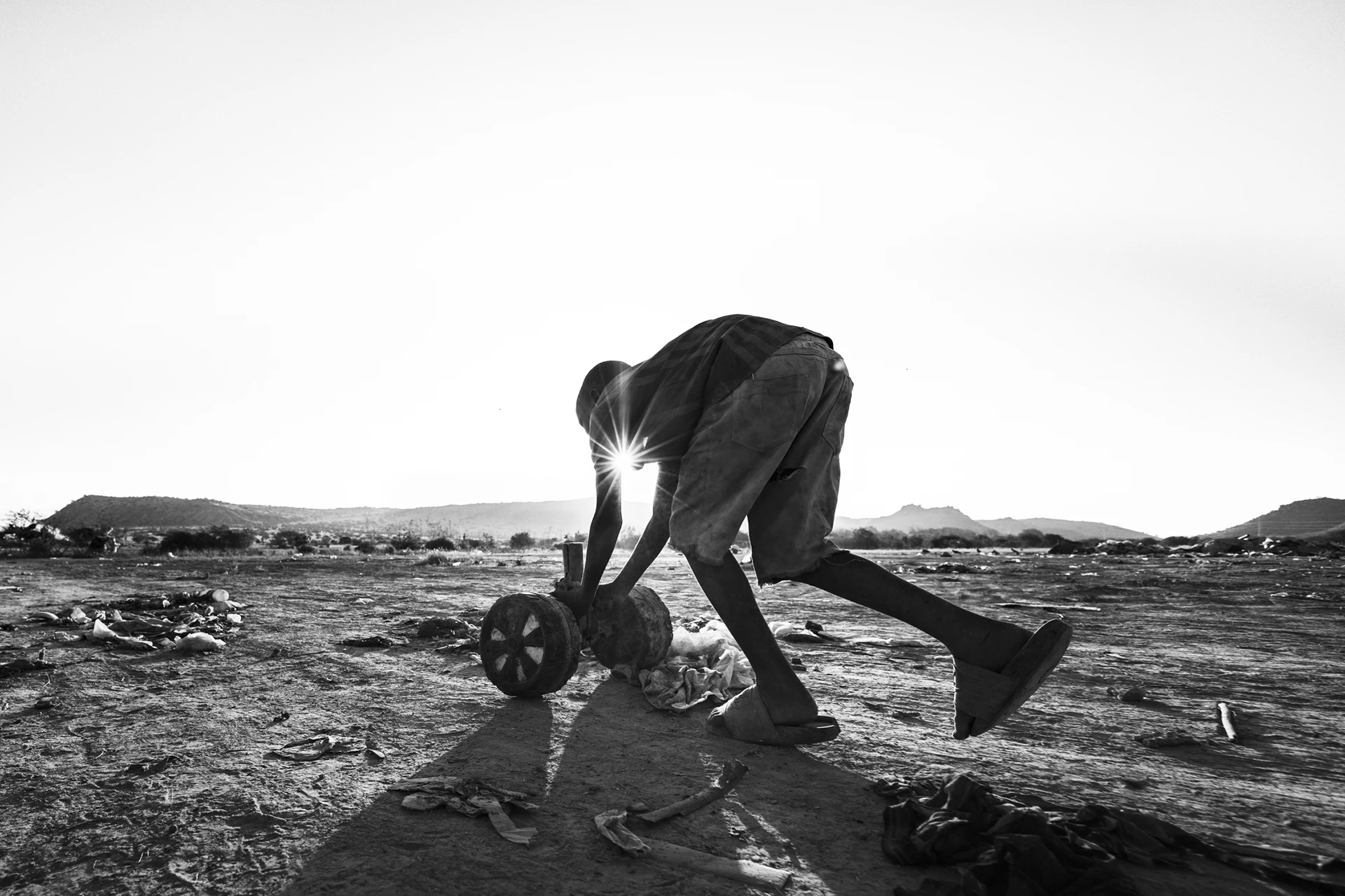
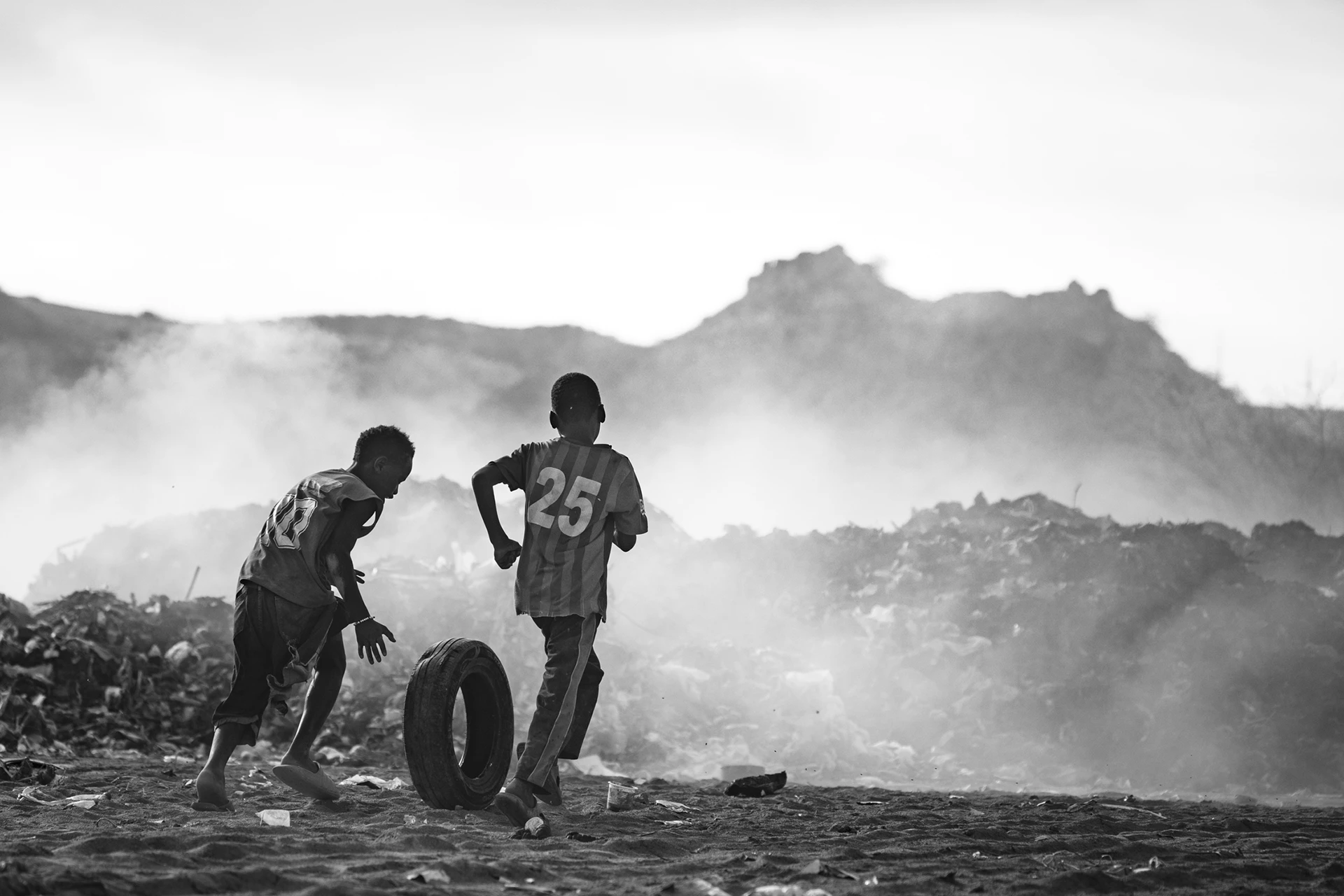
The wheel exerts an almost mystical attraction over these young minds. To them, it represents the concept of perpetual motion, offering a silent, powerful promise that one can always go further, even when their physical legs feel tied to the very same barren, contaminated soil day after day. As they sprint forward, skillfully pushing these newly rescued treasures through the uneven terrain, the heavy atmosphere of the landfill seems to dissipate.
Their faces light up completely with an open, disarming laughter that cuts right through the grim environment. The wheel spins rapidly across the dust, and with every single rotation, their collective imagination spins dynamically too. The toy does not arrive packaged in a perfect, glossy box from a store; instead, it is painstakingly discovered among the mounds, carefully cleaned, and proudly baptized by the raw ingenuity of those who technically have nothing, yet possess the rare spirit to invent absolutely everything.
As they roll rough metal and smooth rubber through the swirling dust clouds, they are doing something far more profound than it appears. They are not merely pushing the heavy, discarded garbage of a consumerist world out of their way—they are actively spinning their own genuine joy into existence. With a simple stick and a circular piece of trash, they successfully transform a tragic landscape of systemic abandonment into an open-air playground of pure, uninhibited freedom.
Explore More...

The Faces of Faith
Manoj Yadav
Looking through Windows
Nadia Eeckhout
Monumental Loneliness
Grit Brune

A photography journal. Published monthly.
E-mail: info@curated.photo
All Rights Reserved. CuratedPhoto @2026